
Australia Has Reached 28 Million People. The Real Question Is: Where Is Everyone Going To Live?
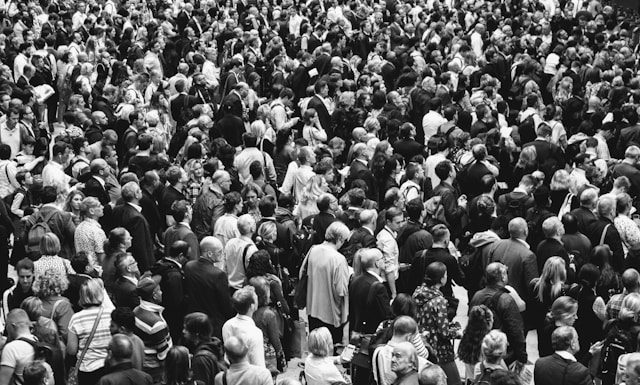
Australia recently reached a major population milestone, passing 28 million people.
On the surface, that is a sign of a growing country. More people can mean more workers, more businesses, more activity, more ideas and a stronger economy.
But there is another side to the story.
If our population grows faster than our ability to build homes, upgrade infrastructure and provide enough rental supply, the pressure has to show up somewhere.
And right now, it is showing up in house prices, rents, vacancy rates and the growing frustration many Australians feel when trying to buy or lease a home.
Population Growth Is Not Just A Number
Australia has grown quickly in recent years, with migration playing a major role in that growth.
After the borders reopened, the country experienced a significant migration catch-up. Students, skilled workers, temporary visa holders and new residents returned or arrived in large numbers. At one point, net overseas migration reached more than 500,000 people in a year.
While migration has now come down from those peak levels, the numbers are still high by historical standards.
This matters because every person needs somewhere to live.
Whether someone is buying, renting, sharing, studying, working or moving in with family, population growth creates demand for housing. That demand is felt most strongly in the cities where new arrivals are most likely to land, particularly Sydney and Melbourne.
Sydney And Melbourne Feel The Pressure First
Sydney and Melbourne have long been the main entry points for overseas migration.
They have the universities, the jobs, the transport networks, the existing communities and the larger rental markets. That means they absorb a large share of new population growth.
But these cities already had housing affordability problems before the recent population surge.
Sydney was already expensive.
Melbourne was already under pressure.
Rents were already rising.
Supply was already tight.
So when a large number of people enter the market at the same time, the existing pressure becomes heavier.
For renters, this means more competition at inspections, fewer available properties and higher weekly rents.
For buyers, it means more competition for well-located homes, especially in areas close to transport, employment, schools and lifestyle amenities.
For investors, it can mean stronger rental demand, but also higher holding costs, more regulation and more complexity around choosing the right property.
For first home buyers, it often feels like the ladder keeps moving higher just as they are trying to climb it.
We Are Not Building Fast Enough
The core issue is not population growth on its own.
The real issue is the gap between population growth and housing supply.
If Australia added people and built enough homes in the right areas, the pressure would be easier to manage. But that is not what has happened.
We have had years of planning delays, construction cost increases, builder collapses, labour shortages, infrastructure bottlenecks and low levels of new supply in some markets.
At the same time, household sizes have changed, more people are living alone or in smaller households, and demand for well-located property has remained strong.
This has created a housing system where demand moves quickly, but supply moves slowly.
Population growth can happen almost immediately.
Housing supply takes years.
Land needs to be released.
Approvals need to be granted.
Infrastructure needs to be built.
Builders need to be available.
Projects need to be financially viable.
That delay is where the pressure builds.
Migration Is Part Of The Housing Story, But Not The Whole Story
It is easy to blame migration for the housing crisis, but the truth is more complicated.
Migration has clearly added demand, especially in Sydney and Melbourne. It would be unrealistic to pretend otherwise.
But housing affordability was already deteriorating before the recent migration surge.
We also have tax settings that now discourage property investment, which I think adds more pressure, planning systems that make it difficult to build enough homes, construction costs that have risen sharply, and a shortage of social and affordable housing.
So the issue is not simply “too many people”.
The issue is that our housing system has not been designed to respond quickly enough when the population grows.
A strong migration program needs to be matched with a strong housing plan.
If we invite more people into the country but do not build enough homes for everyone, the result is predictable.
Rents rise.
Vacancy rates fall.
Prices remain supported or they increase.
Younger buyers get pushed further out.
More families stay in the rental market for longer.
And the dream of home ownership becomes harder for ordinary households.
What This Means For Property Prices
Population growth is one of the key long-term drivers of property demand.
When more people want to live in the same cities, close to the same jobs, schools and infrastructure, well-located property becomes more valuable.
That does not mean prices go up in a straight line. Interest rates, borrowing capacity, consumer confidence, government policy and the broader economy all matter.
But over the long term, if demand keeps growing and supply remains constrained, property prices are likely to remain supported, especially in areas where people genuinely want or need to live.
This is why Sydney and Melbourne are unlikely to become “cheap” cities simply because interest rates rise or buyer confidence softens.
The underlying demand is still there.
The question is whether buyers can afford to act on it.
What This Means For Rents
Renters often feel population growth before buyers do.
When new arrivals enter the country, many rent before they buy. That adds immediate pressure to the rental market.
If rental supply is already tight, even a modest increase in demand can push rents higher.
This is one of the reasons we have seen such strong rental growth across many parts of Australia.
For tenants, the challenge is obvious: higher rents make it harder to save a deposit.
For landlords, higher rents may improve cash flow, but they also need to be considered against rising interest rates, insurance costs, maintenance costs, land tax and compliance obligations.
For policymakers, the rental market is the warning light on the dashboard.
When rents rise quickly, it usually means housing supply is not keeping up with real demand.
What Should Buyers And Investors Do?
For buyers, the lesson is not to panic.
But it is also not to sit back and assume the market will suddenly become easy.
If you are planning to buy, the key is preparation.
Understand your borrowing capacity.
Know your deposit position.
Review your repayments carefully.
Get clear on the areas you can afford.
And most importantly, have a strategy before you start making offers.
For investors, population growth can create opportunity, but not every property will benefit equally.
The focus should be on areas with genuine rental demand, strong employment access, infrastructure, limited oversupply and long-term liveability.
Buying purely because “population is growing” is too simplistic.
The right property, in the right structure, with the right cash flow, still matters.
The Bigger Question
Australia reaching 28 million people is not the problem.
Growth is not the enemy.
A growing country can be a strong country.
But growth without planning creates pressure.
If we want Australia to remain a place where people can build a life, raise a family, start a business and own a home, then housing supply needs to be treated as essential infrastructure.
Not a political talking point.
Not a future promise.
Not something we hope the market will magically fix.
We need more homes, in the right locations, delivered faster.
Because the population has already arrived.
Now the housing system needs to catch up.
